
Bloody Bastards
TibithAction
4.710.82K Reviews
- Version
- 5.0.2
- Installs
- 10.00M
- Age Rating
- Mature 17+
Screenshots
Our Review of Bloody Bastards
 Analysis by Appyee
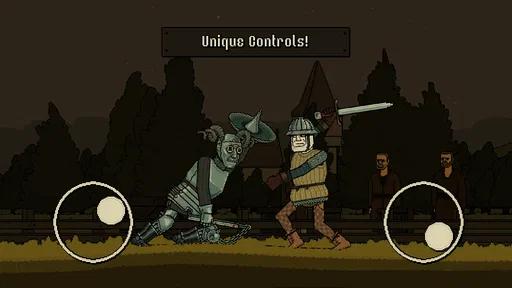
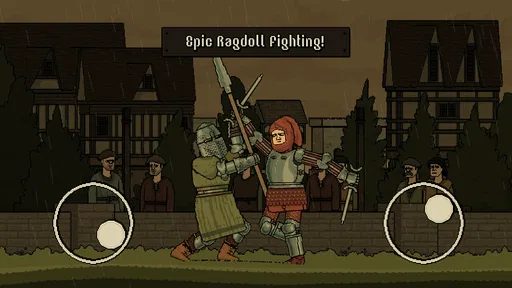
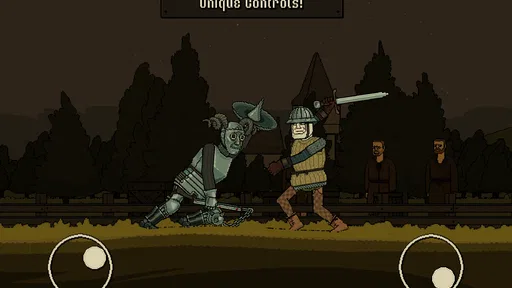
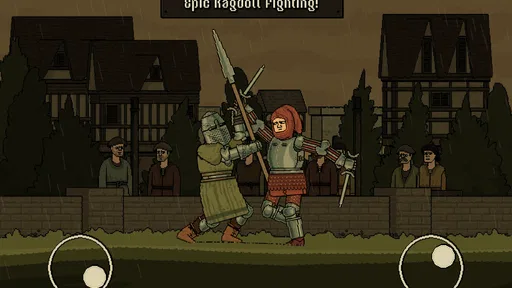
I did not expect Bloody Bastards to feel this distinctive from its short store description. It is a free medieval action game from Tibith built around ragdoll combat, and its unusual control scheme is the first thing that separates it from ordinary mobile fighters. Instead of relying on a familiar virtual joystick and a row of attack buttons, I guide the warrior’s arms and weapons directly, which makes every clash look slightly unstable, physical, and often surprisingly funny.
That awkwardness is not a flaw by accident; it is the personality of the game. A successful strike feels earned because I have to manage movement, reach, timing, and the loose motion of the character at the same time. A bad attack can leave me exposed, while a defensive adjustment can turn a messy exchange into a satisfying counter. The result is an action game that works best in short sessions but has enough challenge to make me return when I know I can improve.
The game is marked for mature players aged 17 and above, mainly because its medieval battles are deliberately bloody. Anyone looking for a gentle cartoon brawler should know that the violence is central to the presentation rather than a minor visual detail. On the other hand, players who enjoy exaggerated physics, weapon-based duels, and compact battles may find a lot to like here. It has earned a 4.7 average from around 400 thousand ratings, and its audience has grown beyond 10 million installs, which matches my impression that this is one of those mobile games people discover through its unusual feel and then keep installed for quick bouts.
Why the first battles feel different
The opening goal is simple: survive the fight in front of me and learn how to make the controls behave. That sounds basic, but the control system gives the early game a learning curve of its own. I am not merely choosing an attack from a menu. I am trying to position a weapon, create enough momentum, avoid swinging harmlessly past the opponent, and recover before the enemy takes advantage.
This creates a useful early tension. The first victories do not come from memorizing a long combo list. They come from understanding distance and restraint. When I rush every attack, the ragdoll movement works against me. When I wait for a clean opening and make a shorter movement, the same system becomes much more reliable. That difference gives the early encounters a clear purpose: they teach me to stop treating the fighter like a perfectly precise action-game character.
The game’s medieval setting also helps those first goals feel readable. I know what I am trying to do immediately: close the distance, land damaging blows, and avoid being overwhelmed. There is no need to learn a complicated story structure before the combat makes sense. For a quick mobile session, that directness is valuable. I can start a battle with almost no preparation, and the result depends mostly on how well I handle the fight rather than how much time I spend navigating menus.
One practical tip made a noticeable difference for me: I stopped trying to move the weapon as far as possible on every attack. Smaller, deliberate motions are easier to correct, especially when the fighter is already off balance. This is one of the game’s less obvious lessons. Aggression matters, but uncontrolled aggression often creates the opening the opponent needs. Players who approach it like a conventional button-mashing brawler may initially blame the controls, while players willing to work with the physics usually settle in faster.
Progress you can feel during ordinary play
The strongest progress signal is not simply that the character becomes more powerful. It is that I become better at reading the situation. A battle that felt chaotic at the beginning starts to reveal patterns: when an opponent is vulnerable, when my own swing has carried me too far, and when backing away is smarter than forcing another hit.
That kind of improvement is especially satisfying because it is visible within a short session. I can lose, change one habit, and perform better in the next attempt. The game does not need a long explanation to show me that I am advancing. My timing becomes cleaner, my attacks become less wasteful, and I begin to understand which opportunities are real rather than merely tempting.
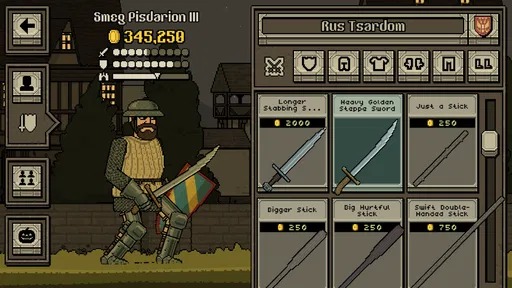
The equipment and unlock-focused side of the experience gives those victories a longer-term reason. Battles are not only isolated tests of reflexes; they feed into the desire to continue improving the fighter and reaching the next stage of progression. I found that the most motivating loop was not chasing an abstract completion target. It was wanting to see whether a new attempt, supported by better preparation and better control, would let me handle an opponent that had previously stopped me.
There is an important trade-off here. Players who need a very transparent progression map, with every reward and milestone explained in detail, may find the experience less immediately satisfying than a highly structured role-playing game. Bloody Bastards is more appealing to people who enjoy noticing progress through performance and gradual advancement rather than receiving constant, elaborate feedback.
For everyday use, I think the game fits a particular situation very well. If I have a few minutes while waiting for an appointment or taking a break, I can play a battle without committing to a long campaign session. If I have more time, repeated attempts become a practice routine: I focus on surviving longer, improving my attacks, or handling a particular type of encounter more calmly. That makes it more flexible than action games that require a lengthy level before any meaningful stopping point.
How the difficulty curve changes the mood
The difficulty does not only come from stronger opposition. It comes from the fact that the same control system becomes less forgiving when battles demand faster decisions. Early on, I can experiment with movement and discover what works. Later, hesitation can be just as dangerous as a mistimed swing. The curve therefore tests both mechanical skill and emotional discipline.
I appreciated that the challenge encourages adaptation rather than one universal attack pattern. A technique that works against a slow, exposed opponent may be risky when the enemy gives me less room to recover. The best response is often to adjust the rhythm of the fight instead of repeating the move that worked a moment earlier. That keeps the action from becoming completely automatic.
Still, the ragdoll design can produce moments that feel messy rather than challenging in a clean, competitive sense. A character may move in a way that makes a failed attack look comical, but that same unpredictability can frustrate me when I believe I made the correct input and the result is difficult to read. This is the main limitation of the game’s central idea: the physics create memorable moments, yet they also reduce the feeling of perfect control.
My advice is to treat mistakes as information instead of immediately restarting in anger. If a weapon repeatedly misses, the answer may be distance or timing rather than a need to attack faster. If the fighter keeps getting punished after a successful hit, the follow-up may be too ambitious. That mindset makes the difficulty feel more manageable and reveals a deeper layer beneath the blood and slapstick movement.
The game is not the best choice for someone who wants a polished competitive fighter with exact frame-by-frame precision. A traditional arena fighter or a more conventional action game will usually feel cleaner and easier to control. Bloody Bastards is better suited to players who accept a little disorder and enjoy the question, “What will happen if I try this movement?” The uncertainty is part of the entertainment, not something the game is trying to eliminate.
What keeps the battles from becoming disposable
Short mobile games often struggle with retention because the first few sessions are enjoyable but do not create a reason to return. Here, the combination of challenge, unlock goals, and direct combat gives me several reasons to play another round. I may want to overcome a difficult encounter, improve the way I handle a weapon, or simply test whether a different approach produces a better result.
The pacing helps too. Battles get to the point quickly, so the game does not spend most of my available time on lengthy travel or dialogue. That makes it easy to use casually, but the same compact structure can encourage “one more attempt” behavior. A failed fight feels close enough to victory that I often want to try again immediately, especially when I can identify one clear mistake.
There is some retention pressure in that loop, and it is worth being honest about it. The game’s difficulty and progression can make the next improvement feel more urgent than the last one. Players who are sensitive to repeated attempts or who dislike being drawn into a cycle of retrying may find the structure tiring. I also noticed that the ragdoll spectacle can make a loss entertaining enough to soften the frustration, but it does not remove the frustration entirely when progress stalls.
In-app purchases are listed at $4.99 per item, while the game itself is free to download. That makes the entry barrier low, which is useful for anyone who wants to test the combat before spending anything. My recommendation is to play long enough to decide whether the control style genuinely suits you before considering any purchase. If the physical combat already feels uncomfortable, extra content or progression support would not solve the underlying mismatch.
The mature presentation is another factor in long-term suitability. The bloody style may be exactly what attracts fans of grim medieval action, but it limits where and around whom I would play it. Someone seeking a family-friendly game for shared use should choose something else, even if the ragdoll fighting sounds appealing. The age rating is not a minor footnote here; it directly affects the audience that can enjoy the game comfortably.
How it compares with familiar mobile action games
Compared with standard side-scrolling brawlers, Bloody Bastards offers less immediate precision and more physical improvisation. In a typical brawler, I press an attack button and expect a predictable animation. Here, the weapon’s movement is the action, so the result can be more personal but also less consistent. That makes each victory feel less like executing a preset sequence and more like managing a small, dangerous physics problem.
Compared with competitive fighting games, it has a lighter and more chaotic identity. I would not choose it when I want carefully balanced combos, strict timing windows, or a tournament-style learning path. I would choose it when I want a medieval duel that can go from controlled to ridiculous in seconds, while still rewarding patience and awareness.
It also differs from many role-playing games that use equipment and progression mainly to create a sense of numerical growth. Here, the player’s handling of the fighter remains central. Better preparation can help, but it does not replace the need to understand the controls. That is a meaningful strength for players who want their own decisions to matter, though it may disappoint anyone hoping to overcome every obstacle simply by upgrading.
The developer, Tibith, has clearly built the experience around one strong concept rather than trying to imitate every popular mobile action format at once. That focus gives the game a memorable identity. The downside is that the experience is narrower: if the ragdoll combat does not click, there is not a conventional control option that transforms it into a standard fighter.
Who should play it and who should pass
I would recommend it to players who enjoy experimenting with unusual controls, medieval weapons, and battles that can be both violent and funny. It is particularly good for someone who likes learning through repeated attempts instead of receiving a long tutorial for every mechanic. The free price makes it easy to sample, and the current version, 5.0.2, gives prospective players a clear version to look for on a compatible device.
It is also a good match for people who want flexible session length. I can play a single encounter during a short break, then return later without needing to reconstruct a complicated narrative. At the same time, the progression and increasing challenge offer enough structure for longer sessions when I am in the mood to practice seriously.
I would tell precision-focused fighting-game fans to approach it cautiously. The controls are the attraction, but they are also the main source of friction. Players who dislike unpredictable physics, repeated retries, or bloody visual presentation should skip it. I would also avoid recommending it to younger players because of its mature age classification, regardless of how playful the ragdoll animation may look at first.
Device compatibility begins with Android 8.0, so anyone using an older Android release should check that basic requirement before planning to play. Beyond that practical point, the more important question is whether the player enjoys a game that asks for physical intuition rather than conventional button accuracy. That decision will tell you more about your likely experience than the genre label alone.
My progression verdict
Bloody Bastards sustains play because its goals are easy to understand but not always easy to achieve. I know what I want from each battle: survive, improve, unlock the next step, and handle the combat with more control. The progress signals are strongest when I notice that my decisions have become calmer and more deliberate, not merely when I reach a new reward.
The difficulty curve is effective when it pushes me to change my habits, although the same ragdoll unpredictability can make some defeats feel less fair than they would in a precise fighter. Its retention loop works best for players who enjoy short retries and gradual mastery. It works less well for anyone who wants a relaxed action game with guaranteed forward movement.
After spending time with it, my honest view is that the unusual controls are both the game’s greatest strength and its clearest warning. They make the medieval battles memorable, but they demand patience. I would keep it installed for quick sessions, especially when I want something more distinctive than another standard mobile brawler. I would not present it as a universal action recommendation, but for the right player, the combination of ragdoll combat, escalating challenge, and hands-on progression gives each victory a satisfying sense of personal improvement.
In short, this is a free action game worth trying if you are comfortable with a little chaos and mature violence. Give it a fair chance by learning controlled movements instead of forcing frantic attacks. If that process feels rewarding, the battles can carry you well beyond the first novelty. If it feels irritating from the start, a more traditional fighter will probably be a better use of your time.
Verdict
Strengths of Bloody Bastards
- Simple controls make the physics-based combat easy to learn.
- Many weapons offer varied fighting styles and experimentation.
- Short battles are convenient for quick gaming sessions.
- The ragdoll physics create funny and unpredictable combat moments.
- Offline play makes it suitable for gaming without an internet connection.
Limitations of Bloody Bastards
- Physics can sometimes feel inconsistent or frustrating during fights.
- Progression may become repetitive after extended play.
- Some weapons and upgrades require significant grinding.
- The minimalist visuals may not appeal to players wanting detailed graphics.
- Ads or in-app purchases can interrupt the overall experience.
Similar Picks in This Category
View All
Temple Run 2: Endless Escape
Imangi Studios4.1

PUBG MOBILE
Level Infinite4.3

Free Fire: 9th Anniversary
GARENA INTERNATIONAL I4.4

Talking Tom: Hero Dash Run
Outfit7 Limited4.3

slither.io
Lowtech Studios3.9

Sniper 3D:Gun Shooting Games
Wildlife Studios4.6
Frequently Asked Questions
What is Bloody Bastards, and how does the gameplay work?
Bloody Bastards is a physics-based medieval fighting game in which you control a warrior using touch controls to battle opponents in one-on-one duels. You move each hand independently, allowing you to swing weapons, block attacks, and create combinations. Fights feel deliberately chaotic, so timing, positioning, and learning enemy patterns are more important than simply tapping as quickly as possible.
Is Bloody Bastards free to download and play?
Bloody Bastards can generally be downloaded for free, but the game may include optional in-app purchases and advertising, depending on the platform and version. You can progress without immediately spending money, although some purchases may help unlock equipment or speed up access to certain content. Before downloading, check the current store listing for pricing, ads, and purchase details.
Does Bloody Bastards require an internet connection?
Many of the game’s core battles can be played offline, which makes Bloody Bastards convenient for short sessions while traveling or when you have limited connectivity. However, online features, advertisements, cloud-related functions, updates, or certain events may require an internet connection. Availability can vary by device and version, so offline access should not be assumed for every feature.
Is Bloody Bastards suitable for children?
Bloody Bastards has a cartoon-like visual style, but its combat is built around medieval violence, including weapons, blood effects, and graphic defeat animations. Because of that presentation, it may not be appropriate for younger children. Parents should review the age rating shown in the Google Play Store or App Store and consider the game’s violence, advertisements, and optional purchases before allowing access.
What devices are needed to play Bloody Bastards comfortably?
Bloody Bastards is designed for mobile devices and normally runs on many modern Android phones, tablets, iPhones, and iPads. A relatively recent operating system and enough free storage are recommended, especially because updates may increase the installation size. Older or lower-powered devices may experience slower performance, reduced visual quality, or less responsive controls during intense fights.
Play our best games!


